
Over the past several years, CPA firms have embraced technology at an unprecedented pace. New applications promise better dashboards, AI-powered insights, forecasting, benchmarking, client collaboration, and industry analytics. Individually, many of these solutions deliver real value.
Collectively, however, they may be creating a new challenge.
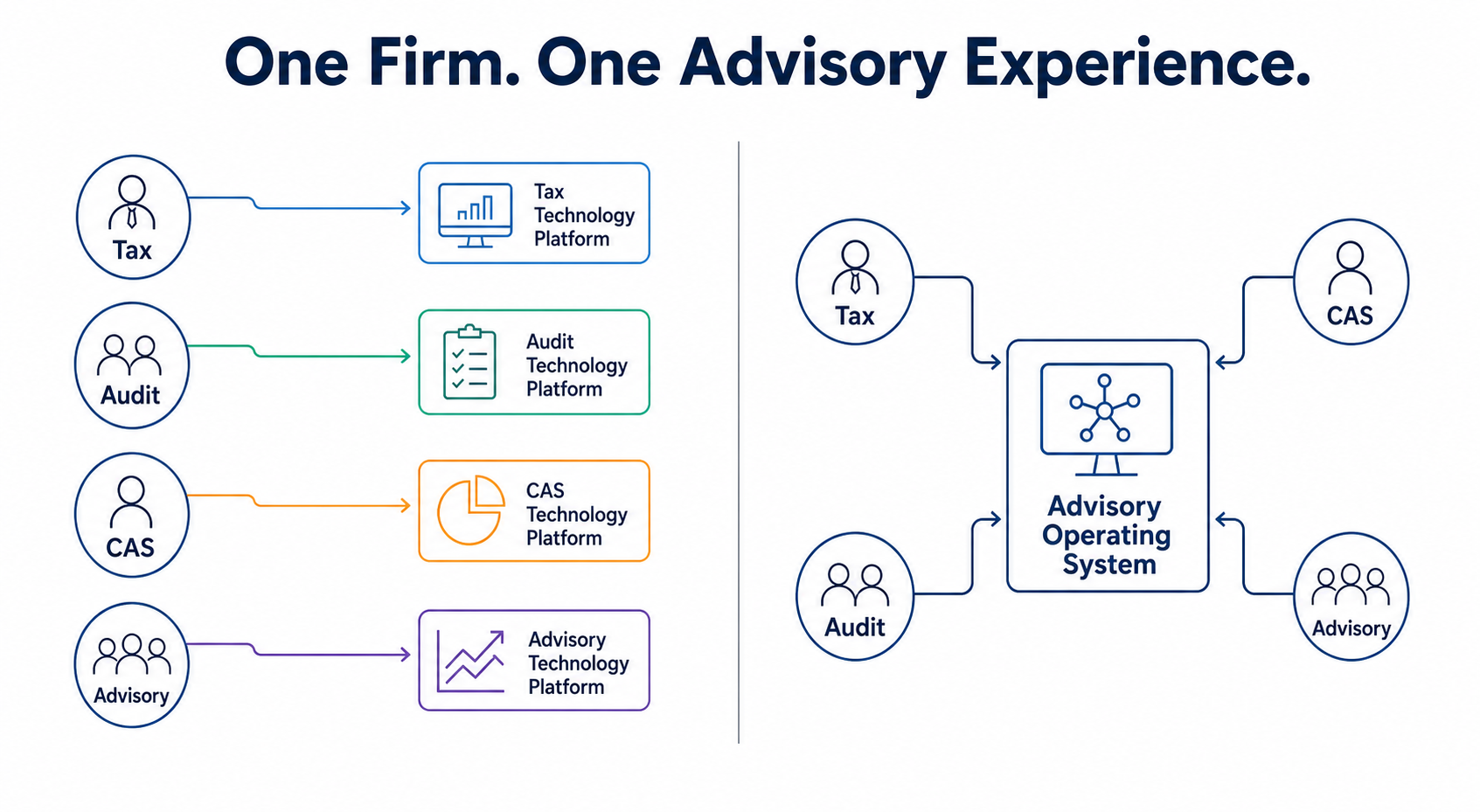
As firms adopt advisory technology department by department, they risk building multiple advisory practices instead of one unified advisory firm.
Every Department Solves Its Own Problem
This pattern is understandable.
The CAS team selects a reporting platform that fits its workflow. Tax professionals experiment with AI tools that summarize returns and identify planning opportunities. Audit teams adopt analytical software to improve engagement quality. Outsourced CFO teams implement forecasting applications that support strategic planning.
Each decision makes sense on its own.
Taken together, they often produce disconnected processes, different methodologies, and inconsistent client experiences.
The Client Doesn't See Departments
Inside the firm, technology decisions are often made by practice leaders.
Clients experience something very different.
They see one CPA firm.
They expect consistent advice whether they're discussing tax planning, financial performance, cash flow, acquisitions, or long-term strategy. They don't distinguish between departments, nor should they have to.
When every practice uses different definitions, benchmarks, workflows, and reporting methods, the firm's advisory experience becomes fragmented. The technology may be modern, but the client experience feels disconnected.
Consistency Creates Confidence
The firms that lead the next decade won't necessarily have the most software.
They'll have the most consistent advisory experience.
Every advisor should begin with trusted financial information. Every client should benefit from common performance measures, consistent benchmarking, and a shared methodology for identifying opportunities and discussing results.
Professional judgment will always differ from advisor to advisor.
The underlying framework should not.
Thinking Beyond Individual Applications
Technology has always played an important role in professional services, but every major transformation has eventually moved beyond individual applications.
Tax software became tax platforms.
Audit software became engagement platforms.
Cloud accounting became the foundation for modern CAS practices.
Advisory is following the same path.
The opportunity is no longer selecting the best individual tool. It's creating the technology foundation that allows every advisory tool, every data source, and every professional to work together.
That is the role we believe an Advisory Operating System will play.
Questions for Your Leadership Team
- How many different advisory technologies are used across your firm today?
- Would two advisors from different departments prepare for the same client meeting in the same way?
- Are your benchmarks, KPIs, and methodologies consistent across practices?
- Is your technology strategy creating one advisory firm or several independent advisory practices?